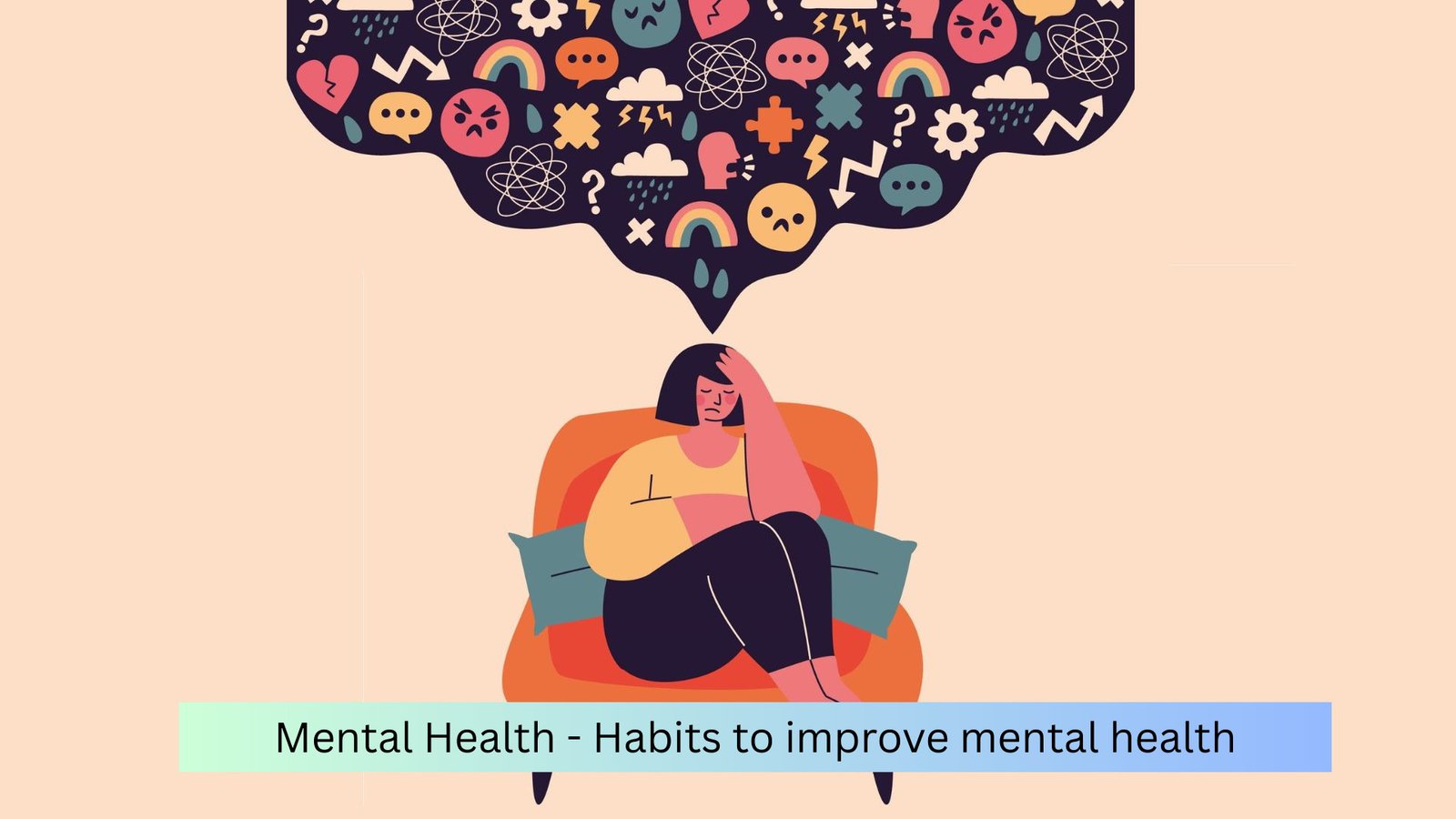
Mental Health – Key Daily Habits for Mental Wellness
What makes mental health so important?
Mental health helps determine how you handle stress, relate to others, and make choices, explains, a licensed professional counselor and author of the book “The Anxiety Healer’s Guide.”
Seponara goes on to say that caring for your mental health can lead to:
- improved mood
- reduced anxity
- clearer thinking
- deeper relationships
- improved self esteem, self-worth, and confidence
Nurturing your mental health can also help you manage health conditions that are worsened by stress, like heart disease, said Seponara. According to Oludara Adeeyo, a psychiatric social worker and author of “Self-Care for Black Women,” your mental health can impact everything about your life, including the ways you view and move through the world and your ability to handle the things life throws at you.

Read this: Tips to Boost Your Mental Health and Feel Better Daily Mental Health
Get restful sleep
Sleep isn’t just a nonnegotiable for physical health. It also plays an essential role in mental health. The American Psychological Association reported in 2023 that sleep deprivation makes people less happy and more anxious. The quality of your sleep is also important. Disrupted sleep can contribute to mental health symptoms. To get enough high quality sleep, try starting with these habits:
- Avoid caffeine after 3 p.m.
- Try to wake up and go to sleep at the same time every day.
- Make your bedroom into a quiet, relaxing, clutter-free space.
- Aim to keep the temperature in your bedroom somewhere between 60°F and 65°F (16°C to 18°C).
Healthy sleep habits can be harder to build on your own if you havea sleep disorder. If you think your sleeping issues may relate to a sleep condition, a sleep specialist can offer more information about helpful evidence-based treatments, like cognitive behavioral therapy for insomnia. Mental health concerns can also lead to poor sleep, which means changes to your sleep environment and nighttime routine might not make a lasting difference. If you don’t notice much improvement after trying these strategies, connecting with a therapist may be a helpful next step.
Try to spend less time on social media:
- keep your phone in a drawer or outside your bedroom while you’re in bed
- make a list of other, more meaningful activities to replace your usual scrolling sessions
- turn off notifications or delete social apps from your phone
Humans are social creatures, and strong relationships can have a positive influence on your mental health in various ways.
Friendships, for example, can:
- ease feelings ofllonelines
- make it easier to get emotional support
- add meaning to your life
You have plenty of options for cultivating positive connections and nurturing your friendships:
- Keep in touch by checking in regularly, even with just a quick text or funny meme.
- Meet up for a morning walk or breakfast.
- Call for a short chat during your lunch break.
- Schedule biweekly or monthly dinner dates.
Exercise offers a range of mental health benefit, including:
- relieving stress
- lifting mood
- helping you fall asleep faster and sleep longer
- helping you manage symtoms of depression and anxiety conditions
Movement can involve something different for every person, and it doesn’t have to mean going to the gym if that’s not your thing. Instead, make movement enjoyable for you by opting for physical activities that work best for your body, health, and preferences.To get started, experiment with a range of physical activities, and keep doing the ones that resonate with you.
Enjoyable movement could include:
- joining a running or walking club
- taking a slower-paced restorative yoga class
- seated exercises trying throwing a dance party
- taking stretching breaks every hour
- gardening or doing other work in your backyard
- going on a weekend family hike or walk along the beach
What you eat can also influence your mental health. To support improved well-being, try expanding your diet to include foods rich in mood supporting nutrients such as:
- berries
- bananas
- beans
- whole grains
- fatty fish, like salmon
It can also help to simply ensure that you fuel your body every day, as eating something is better than not eating at all.Drinking plenty of water, throughout the day is also beneficial.
“When you’re dehydrated, you’re denying your brain and body the nutrients needed to survive and operate at a more optimal level,” noted. Additionally, some foods and drinks, especially alcohol, caffeine, refined carbs, fried food, and added sugars, may worsen, anxiety symptoms. Limiting these when possible can help further support your mental health.

On difficult days, you might find it tough to do any of the above, which might make you feel even worse. At times like these, , a licensed professional counselor and author of “How To Keep House While Drowning,” suggests turning to compassionate, more accessible strategies, like:
- giving yourself permission to stay in and rest
- engaging in breathwork, even if it’s just for a few minutes
- taking a bath or a long, hot shower
Another approach when mood is low is to choose just one small, manageable action each day that supports your well-being.“Whether it’s making your bed, drinking one glass of water in the morning, or writing in a journal, making this daily promise to yourself will help to eventually become a habit, and you will begin to feel empowered,.
- Lie on your back with your hands by your sides. Spread your feet apart — the distance of your hips, or a bit wider.
- Think of being relaxed, yet present. You feel calm, but still aware.
- Bring your attention to your physical body and then to your breath.
- On an inhale, imagine a slow-moving wave entering from the soles of your feet and traveling to the crown of your head.
- On the exhale, visualize a slow-moving wave traveling from the crown of your head back down to the soles of your feet.
- Feel your body become heavy, and stay with this relaxed present awareness for 10 to 30 minutes.
If you only have a few minutes to relax, suggested these quick restorative practices:
- Put both hands over your heart, close your eyes, and take several deep breaths, feeling the warmth and comfort of your touch.
- Breathe in for 2 counts and breathe out for 4 counts for 12 cycles.
Get some sunshine
“The sun is a great source of vitamin D, and studies, show it can improve attitude and mood,” . Your outdoor time doesn’t have to be long, either. As noted, “Five minutes of blue skies can do your mind and your heart some real good.”
If you have several minutes:
- taking a quick walk
- sitting in your backyard, on your balcony, or at a local green space
- standing outside breathing in the fresh air
- opening a window near your desk, if possible
- taking a work meeting outside, if you can
- eating lunch at a nearby park
- exercising outdoors or engaging in another physical activity outside, like gardening or stretching
Read this:Mental Health How to improve your mental wellbeing
Follow Us
Follow KannadaFolks channel on WhatsApp
Visit the Kannadafolks.in follow the latest updates
Subscribe and Receive exclusive content and updates on your favourite topics
Subscribe to KannadaFloks YouTube Channel and watch Videos
 Support Us