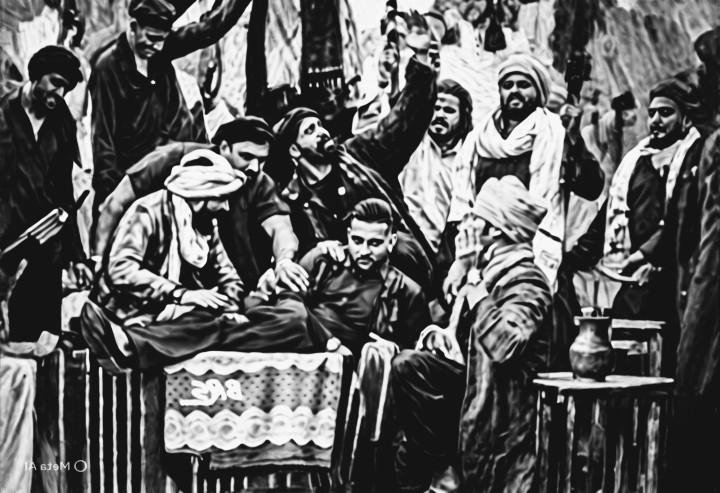
Indira Brigade or nest of criminals And the lie that Bengaluru forgot.
Sounds official, doesn’t it? Sounds like something you’d read in a government gazette. Like a women’s wing. Like a youth corps.
Read our previous article – M.P. Jayaraj Ruthless criminal of Indira brigade
Let me tell you about the Indira Brigade.
Not the gang wars. Not the don who came after. Not the empire that crumbled.
Just the Brigade itself. What it was. What it did. Who it answered to.
And who it left behind.
The Name Indira Brigade or nest of criminals.
criminalIndira Brigade.
Say it out loud. Indira Brigade.
What do you hear?
A women’s wing? A student corps? Some kind of patriotic youth organization, named after the Prime Minister herself?
Yeah. That’s what they wanted you to think.
D Nataraj—son-in-law of the Chief Minister, D Devaraj Urs, two terms—stood in front of newspaper reporters and said: “I want the Indira Brigade to function like the KGB. A powerful intelligence unit. Its main aim is to protect Indira Gandhi.”
KGB. Intelligence. Protection.
That’s what he said.
That’s not what it was.
The Reality
Retired police officers don’t soften their words. Not after forty years.
“They were just goondas.”
Not spies. Not patriots. Not protectors.
Goondas.
Men who were at the disposal of Nataraj and Urs. Political muscle. Enforcers in shirtsleeves. The strong arm of a ruling party that needed people unafraid to get their hands dirty.
And they started where all such men start.
Parks.
Couples. Young lovers sitting on benches, thinking they were invisible. The Brigade would surround them. Rob them. Beat the men. Humiliate the women. Sometimes worse.
Why parks? Because it was easy. Because nobody protected lovers. Because a boy and a girl in the dark won’t go to the police.
And because they could. Political backing meant no arrests. No questions. No consequences.

Fictional image
The Man who was a chess peace
Jayaraj MP.
Bodybuilder. Former HAL employee. Fired for not showing up to work.
Empty-handed. Looking for direction. Nataraj found him and made him useful.
Jayaraj wasn’t a mastermind. He wasn’t a strategist. He was a man who understood fear. Who understood that a sword on a police desk said more than a thousand threats.
He built the machine. But the machine belonged to Nataraj.
The Room with bark trauma
Let me take you to Wilson Garden. 1978.
A retired police officer—I spoke to him once, he’s gone now—he told me about a raid they did. Routine, he said. Just following up on a complaint. They go to Jayaraj’s house. Big bungalow. Nice neighbourhood.
They check the main house. Nothing. They check the garage out back.
And there’s a room.
Not a store room. Not a servant quarters. A room with no windows. Soundproofed. A hook in the ceiling. Stains on the floor they couldn’t identify.
A torture chamber.
In a residential neighbourhood. Behind a garage. In the home of a man protected by the Chief Minister’s office.
And here’s the thing that stuck with me—the officer said: “We didn’t ask what happened there. Because we already knew. And we couldn’t do anything about it.”
Nobody reported it. Nobody filed a complaint. Because if you did, you knew what came next.
And there was no one to tell.
The Sword slayed hundreds of head
Wilson Garden police station. An inspector is doing his job. Trying to track Jayaraj for something routine.
Jayaraj walks in.
Walks past the front desk. Past the constables. Past the clerk who pretends not to see.
Walks up to the inspector’s desk. Places a sword on it.
Doesn’t speak. Doesn’t smile. Doesn’t threaten.
Just stands there.
What do you do?
You let him walk out. That’s what you do.
The message is not a message. It’s a fact. I can walk into your station. I can put a weapon on your desk. And you will do nothing.
He was right.
The Patron of this game
D Nataraj.
He never held the sword. Never worked the room. Never touched a victim.
He didn’t need to.
He had Jayaraj. Jayaraj had the Brigade. The Brigade had the streets.
And Nataraj had the Chief Minister’s office.
When you ask how the Indira Brigade survived, how it thrived, how it operated in plain sight for years—that’s your answer.
Not cleverness. Not secrecy.
Protection.
From the top.
The Lie nobody believed in
D Nataraj told the press the Indira Brigade was an intelligence unit.
You know what intelligence they were gathering?
Which couples were sitting in which park.
Which businessman hadn’t paid his hafta yet.
Which cop was brave enough to file a report.
That was their intelligence work.
There was no information gathering. No counter-intelligence. No protection of the Prime Minister.
There was a torture room in Wilson Garden. There was a sword on a police desk. There were young couples in parks who learned to run when they saw men in shirtsleeves approaching.
That was the Indira Brigade.
A lie dressed in a patriotic name.
And nobody laughed. Because nobody could laugh. Because the Chief Minister’s office was backing them. And if you spoke up, you didn’t just get a visit from the police.
You got a visit from the Brigade.
So tell me. What do you do?
The Men the man behind the black room
We don’t know their names.
We know Jayaraj. We know Nataraj. We know the faces that made the newspapers.
But the men who actually swung the rods in those parks? The men who worked the room in Wilson Garden? The men who stood behind Jayaraj when he placed that sword on the desk?
Unnamed. Unremembered.
They were not leaders. They were not dons. They were muscle. Interchangeable. Disposable. Recruited from streets and gyms and small-time crime, given protection and permission to do what they already wanted to do.
The Indira Brigade wasn’t a brotherhood. It wasn’t a family.
It was a payroll.
The Work
Extortion came later. But at its core, the Brigade’s work was simple.
Intimidation.
Businessmen who wouldn’t cooperate. Shopkeepers who wouldn’t pay. Politicians who wouldn’t fall in line. Witnesses who wouldn’t forget.
A visit from the Brigade changed their minds.
Not always with violence. Sometimes just with presence. Three or four men standing in your shop, not speaking, not leaving. Following your children home from school. Sitting outside your house until midnight.

Fictional image
The fear worked. The fear was the point.
And because the fear came from men with political protection, there was no appeal. No higher authority. No one to call
The End
It ended not because the system worked. Not because someone exposed the lie. Not because justice arrived.
It ended because Jayaraj attacked another man inside a courtroom, and that man survived long enough to talk.
Gopi Thigalarpete. Wanted rowdy. Walking into court number 2. Jayaraj’s men flanked him. Sword under a shawl. Gopi ran inside. Survived. Recorded his statement.
The judge became the complainant. Rare. Almost unheard of.
Jayaraj got ten years in 1979.
And the Brigade—without its leader, without its muscle, without the man who placed the sword on the desk—simply… dissolved.
Not defeated. Not dismantled. Not held accountable.
Just… replaced.
What Remains
Police files. Retired officers’ memories. A chapter in a book nobody reads.
The men who paid for that torture room never answered a question. The men who ordered those park beatings never saw a courtroom. The men who placed that sword on that desk—some of them lived normal lives. Some of them died old men. Some of them are still alive.
The Indira Brigade became a footnote.
But a footnote isn’t justice.
It’s just where we put things we don’t want to look at anymore.
Read our previous article – Brutal Story of Bangalore Gangsters : A Bloody Historical Timeline
Bengaluru
Now walk with me. Today.
MG Road. You see startups and coffee shops and young people with laptops. You don’t see blood. You don’t see what was there before.
But I’ll tell you what was there.
Liberalisation. 1991. Bangalore becomes Bengaluru becomes the Silicon Valley of India. American companies set up offices. European companies follow. Young engineers in khaki pants and button-downs replace young men in lungis and banians.
And the politicians—HD Deve Gowda, 1995, Davos, World Economic Forum—he stands on a stage in Switzerland and pitches Brand Bengaluru to the world.
You think he wants stories about machetes and farmhouses? You think foreign investors want to hear about torture rooms in Wilson Garden?
No.
So the police crack down. Not because they suddenly grew a conscience. Because they were told to. Because the money demanded it.
The gangs didn’t disappear. They never disappear. They just got quieter. More sophisticated. Moved from street corners to boardrooms. From extortion to real estate.
But the blood? The blood got paved over. Buried under flyovers and tech parks and coffee chains.
let me ask one thing?
now you walk down MG Road. You see young people laughing outside pubs. You see startup founders networking over cold brew. You see the city that forgot.
But I remember.
I remember a room in Wilson Garden with a hook in the ceiling.
I remember a sword on a police desk.
I remember men in shirtsleeves approaching couples in parks, and nobody stopping them.
And I wonder: what rooms exist today that we don’t know about? What swords are being placed on what desks? What names are being whispered that we’ll only learn ten years from now?
Because this city didn’t stop. It just got better at hiding.
And the Indira Brigade?
They’re still here. They just changed their name.
(Long pause.)
That was the Indira Brigade.
Not a gang war. Not an empire. Not a legacy.
A torture room. A sword. A lie.
And forty years later, still no one called to account.
That’s the story. That’s Bengaluru.
The garden city. The IT city. The city of dreams.
And the city of blood you never see on the brochures.
 Support Us