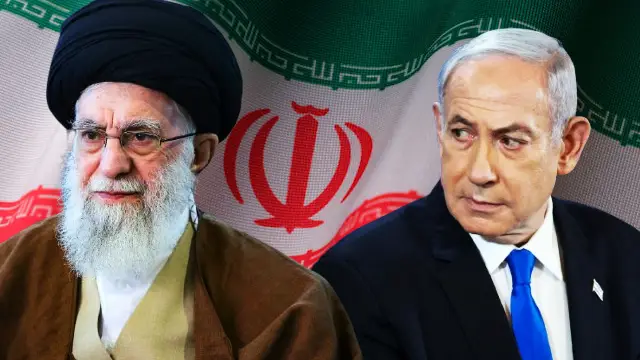
The Iran-Israel Conflict: From Shadow War to Open Confrontation
The Roots of a Decades-Long Rivalry
The question haunting global headlines today is simple: why are Iran and Israel at war? The answer lies not in a single provocation, but in a half-century of ideological hatred, strategic rivalry, and a tragic cycle of escalation that finally erupted into open flame.
The Ideological Imperative
To understand Iran’s motivation, one must understand the 1979 Islamic Revolution. Before that year, Iran and Israel were quiet allies. But when Ayatollah Khomeini swept into power, he fundamentally redefined Iran’s identity. The new regime adopted an official policy of opposing Israel’s existence, framing the conflict not as a territorial dispute but as a religious duty. Israel became the “Little Satan,” a Western outpost in the Muslim world that must eventually be eliminated.
For Iran’s leadership, support for the Palestinian cause and opposition to Israel became pillars of its revolutionary legitimacy. This ideology transformed the conflict from a political disagreement into an existential mission.
Read our previous article-Doordarshan news anchor Sarla Maheshwari who passed away ಸರಳಾ ಮಹೇಶ್ವರಿ ನಿಧನ
The Security Dilemma
For Israel, the threat is equally existential—but for different reasons. Israel views Iran as the ultimate strategic threat: a powerful state openly calling for its destruction, actively pursuing nuclear capabilities, and building a ring of proxy armies on its borders.
The Nuclear Factor has been the single greatest accelerant. Israel, with its policy of nuclear ambiguity, has watched Iran’s uranium enrichment program with growing alarm. The 2015 Nuclear Deal temporarily froze tensions, but when the United States withdrew from the agreement in 2018, the stage was reset for confrontation. Israel insists it cannot allow its mortal enemy to obtain the ultimate weapon.
The Proxy War That Became Direct
For decades, Iran and Israel fought through intermediaries—Iran building the “Axis of Resistance” (Hezbollah, Hamas, Palestinian Islamic Jihad), while Israel struck Iranian targets and assassinated nuclear scientists. This shadow war provided deniability but never resolution.
The dam finally broke in 2024, when Israel struck an Iranian diplomatic compound in Damascus, killing senior commanders. Iran responded with its first-ever direct missile attack on Israeli territory. The unspoken rule—never attack each other’s soil—was shattered. Once direct strikes began, each retaliation demanded a stronger response, creating the escalation spiral that now consumes the region.
Read our previous article – Rajinikanth and Kamal Haasan New Movie Announced-47 ವರ್ಷಗಳ ಬಳಿಕ ಒಂದಾದ ಕಮಲ್-ರಜನೀಕಾಂತ್
 Support Us