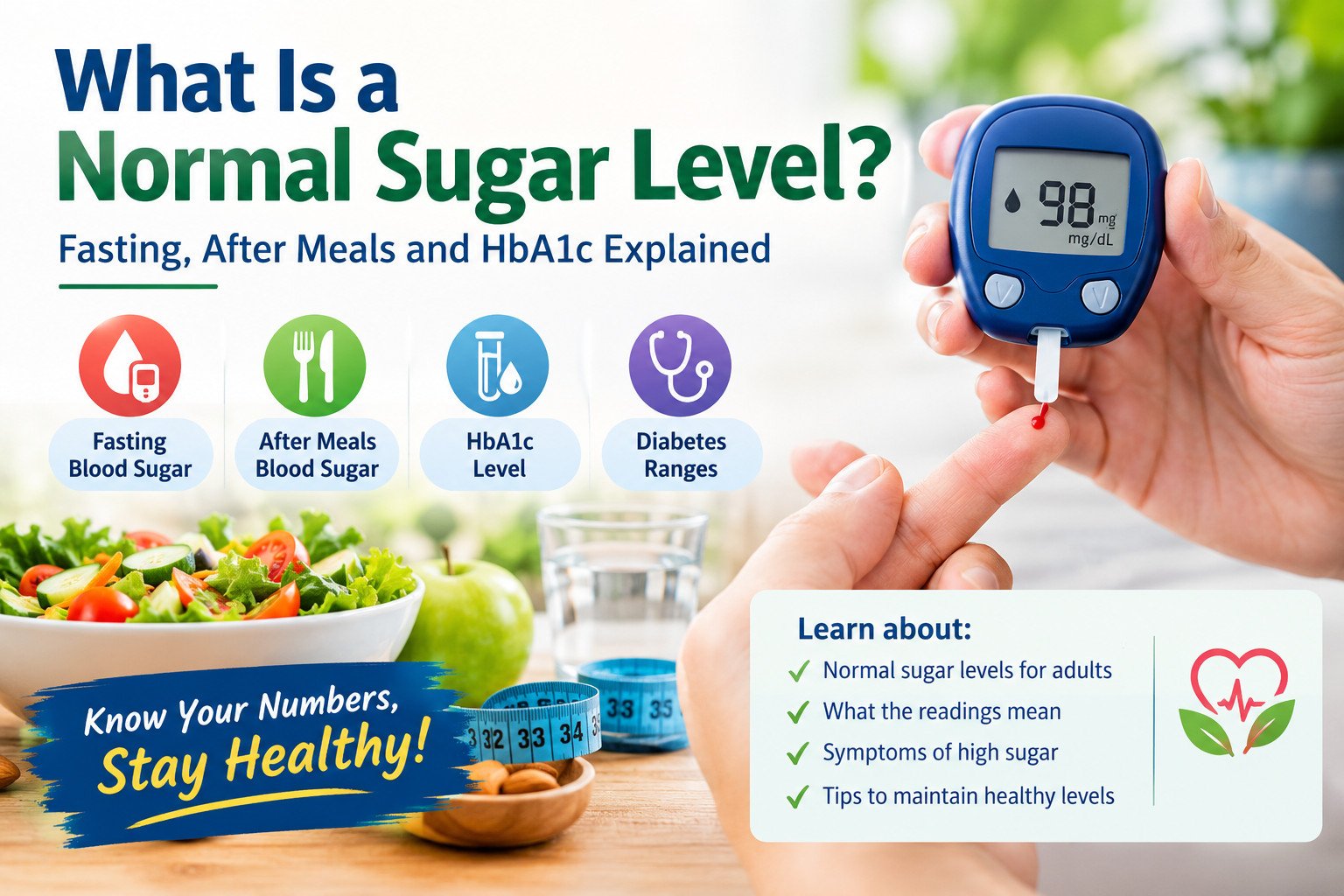
What Is a Normal Sugar Level? Fasting, After Meals and HbA1c Explained
Blood sugar, also known as blood glucose, is the main source of energy for the body’s cells. The body gets glucose from foods containing carbohydrates, while the hormone insulin helps move glucose from the bloodstream into cells.
Maintaining a healthy blood sugar level is essential for overall health. If blood glucose remains consistently high, it may indicate prediabetes or diabetes. Blood sugar that falls too low can also cause health problems.
But what is a normal sugar level? The answer depends on when the blood test is taken, whether a person has diabetes, and the type of test used. Fasting blood sugar, post-meal blood sugar and HbA1c are three common measurements that help assess glucose levels.
Understanding these readings can help people identify potential problems early and discuss the appropriate next steps with a healthcare professional.
What Is a Normal Blood Sugar Level?
For adults who are not pregnant and do not have diabetes, commonly used blood glucose ranges are shown below.
| Blood sugar test | Normal range | Prediabetes range | Diabetes range | Fasting blood sugar | 99 mg/dL or below | 100–125 mg/dL | 126 mg/dL or above | HbA1c | Below 5.7% | 5.7–6.4% | 6.5% or above | Two-hour oral glucose tolerance test | 139 mg/dL or below | 140–199 mg/dL | 200 mg/dL or above |
|---|
Read this – Health Tips ಆರೋಗ್ಯಕ್ಕೂ ಸೂಪರ್ಫುಡ್ ಈ ಪುದೀನಾ ಆಹಾರದಲ್ಲಿ ಸೇರಿಸಿಕೊಂಡರೆ ಸಿಗುತ್ತೆ ಹಲವು ಪ್ರಯೋಜನ!
These are commonly used diagnostic thresholds for non-pregnant adults. A healthcare professional may recommend repeat testing to confirm a diabetes diagnosis, particularly when there are no obvious symptoms.
1. What Is a Normal Fasting Blood Sugar Level?
Fasting blood sugar is measured after a person has avoided food and caloric drinks for at least eight hours. Water is generally permitted.
For adults who are not pregnant:
- Normal: 99 mg/dL or below
- Prediabetes: 100–125 mg/dL
- Diabetes range: 126 mg/dL or above
For example, a fasting blood sugar reading of 92 mg/dL falls within the normal range. A reading of 112 mg/dL falls within the prediabetes range and should be discussed with a healthcare professional.
A single elevated reading does not always establish a diagnosis. Doctors may recommend repeat laboratory testing based on the result and the person’s symptoms.
2. What Is a Normal Blood Sugar Level After Eating?
Blood glucose naturally rises after meals because the body breaks down carbohydrates into glucose. The increase depends on the food consumed, portion size, physical activity and individual metabolism.
For people without diabetes, a two-hour oral glucose tolerance test uses a standard glucose drink and has specific diagnostic thresholds. These results should not be confused with an ordinary meal-time reading.

Read here – Healthy Habits for a Better and Healthier Life; ಆರೋಗ್ಯಕರ ಜೀವನ
For people already diagnosed with diabetes, a commonly recommended treatment target is:
- Before meals: 80–130 mg/dL
- One to two hours after the beginning of a meal: Below 180 mg/dL
These are general treatment targets for many non-pregnant adults with diabetes, not universal diagnostic ranges. Individual targets may differ depending on age, medicines, pregnancy status and other health conditions.
3. What Is a Normal HbA1c Level?
The HbA1c test measures the percentage of haemoglobin in red blood cells that has glucose attached to it. It provides an estimate of average blood sugar over approximately the previous two to three months.
Commonly used HbA1c diagnostic ranges are:
- Normal: Below 5.7%
- Prediabetes: 5.7–6.4%
- Diabetes range: 6.5% or above
Unlike a fasting blood sugar test, HbA1c generally does not require fasting.
For example, an HbA1c result of 5.4% falls within the normal range, while a result of 6.0% falls within the prediabetes range.
Certain conditions, including some types of anaemia, blood disorders and pregnancy, can affect HbA1c accuracy. A doctor may recommend other tests when necessary.
4. What Are the Symptoms of High Blood Sugar?
High blood sugar, also called hyperglycaemia, may develop gradually. Some people do not experience noticeable symptoms in the early stages.
Common symptoms include:
- Increased thirst
- Frequent urination
- Unusual tiredness or weakness
- Blurred vision
- Increased hunger
- Unexplained weight loss
- Cuts or wounds that heal slowly
- Recurrent infections
These symptoms can have other causes as well. If they persist, arrange a medical evaluation and appropriate blood glucose testing.
Seek urgent medical attention if high blood sugar occurs with vomiting, abdominal pain, deep or rapid breathing, confusion or severe drowsiness. These can be warning signs of a serious diabetic emergency.
5. What Causes Blood Sugar Levels to Increase?
Several factors can contribute to elevated blood glucose:
Diet: Large portions of carbohydrate-rich foods, sugary drinks and sweets can raise glucose levels.
Physical inactivity: Regular movement helps the body use glucose more effectively.
Stress and illness: Hormonal changes during physical illness or emotional stress may temporarily increase blood sugar.
Insufficient insulin: The body may not produce enough insulin or may not respond effectively to it.
Sleep problems: Poor sleep and irregular sleep patterns can affect glucose regulation.
Certain medicines: Some medications, including corticosteroids, can raise blood glucose levels.
Persistent high readings should be evaluated rather than attributed to a single meal or stressful day.
6. How Can You Maintain Healthy Blood Sugar Levels?
Healthy daily habits can help reduce the risk of developing type 2 diabetes and support glucose management.
Eat balanced meals
Include vegetables, pulses, whole grains, suitable protein sources and healthy fats. Control portions of rice, chapati and other carbohydrate-rich foods rather than relying on restrictive diets.
Reduce sugary drinks
Limit soft drinks, sweetened juices and other beverages containing added sugar. Water is generally a good everyday choice.
Exercise regularly
Walking, cycling, swimming and other suitable activities can improve insulin sensitivity. Adults should aim for regular physical activity, adjusted to their health and fitness level.
Maintain a healthy weight
For people who are overweight, even modest, sustained weight loss may help reduce the risk of type 2 diabetes.
Sleep well
Aim for a consistent sleep schedule and adequate rest. Persistent sleep difficulties should be discussed with a healthcare professional.
Get regular health check-ups
Blood glucose screening may be particularly important for people with a family history of diabetes, excess weight, previous gestational diabetes or other risk factors.
People taking insulin or glucose-lowering medicines should not change their medication doses or skip meals without appropriate medical guidance.
7. When Should You Get Your Blood Sugar Tested?
Consider speaking to a healthcare professional about testing if you:
- Experience symptoms such as excessive thirst or frequent urination.
- Have repeatedly elevated home glucose readings.
- Have a family history of diabetes.
- Have been diagnosed with prediabetes.
- Have risk factors such as excess weight or a history of gestational diabetes.
- Are pregnant or planning a pregnancy and need appropriate screening.
A home glucometer is useful for monitoring glucose, especially for people with diagnosed diabetes. However, home meter readings alone should not be used to establish a diagnosis. Laboratory tests and clinical assessment are important.
Frequently Asked Questions (FAQs)
What is a normal sugar level in the morning?
For a non-pregnant adult without diabetes, a fasting blood sugar level of 99 mg/dL or below is generally considered normal after at least eight hours without caloric intake.
Is 110 mg/dL a normal fasting sugar level?
A fasting reading of 110 mg/dL falls within the commonly used prediabetes range of 100–125 mg/dL. A healthcare professional can advise whether repeat testing is needed.
Is 140 mg/dL a normal blood sugar level after eating?
The meaning depends on when the reading was taken, the meal consumed and whether the person has diabetes. A reading of 140 mg/dL after an ordinary meal is not interpreted in the same way as a two-hour oral glucose tolerance test result.
What is a normal HbA1c level?
An HbA1c below 5.7% is generally considered normal for diagnosing diabetes in non-pregnant adults.
Can blood sugar be high without symptoms?
Yes. Prediabetes and type 2 diabetes can develop without obvious symptoms. Appropriate screening and blood tests can help identify these conditions.
How often should blood sugar be checked?
The frequency depends on individual risk, diagnosis and treatment. Some people need periodic laboratory screening, while those using insulin or certain diabetes medicines may need daily monitoring or more frequent checks.
A normal sugar level depends on the type of test and when the blood sample is taken. For most non-pregnant adults without diabetes, fasting blood sugar of 99 mg/dL or below and HbA1c below 5.7% fall within commonly accepted normal diagnostic ranges.
Regular screening, balanced meals, physical activity, adequate sleep and appropriate medical guidance can help support healthy blood glucose levels. If your results fall outside the normal range, consult a healthcare professional instead of relying on a single reading or attempting to diagnose yourself.
Medical disclaimer: This article is for general educational purposes and is not a substitute for professional medical advice, diagnosis or treatment. Pregnancy, existing diabetes and certain medical conditions require different interpretation and individualised glucose targets.
References:
- Centers for Disease Control and Prevention (CDC) — Diabetes Testing
- National Institute of Diabetes and Digestive and Kidney Diseases (NIDDK) — Diabetes Tests and Diagnosis
- NIDDK — The A1C Test
 Support Us