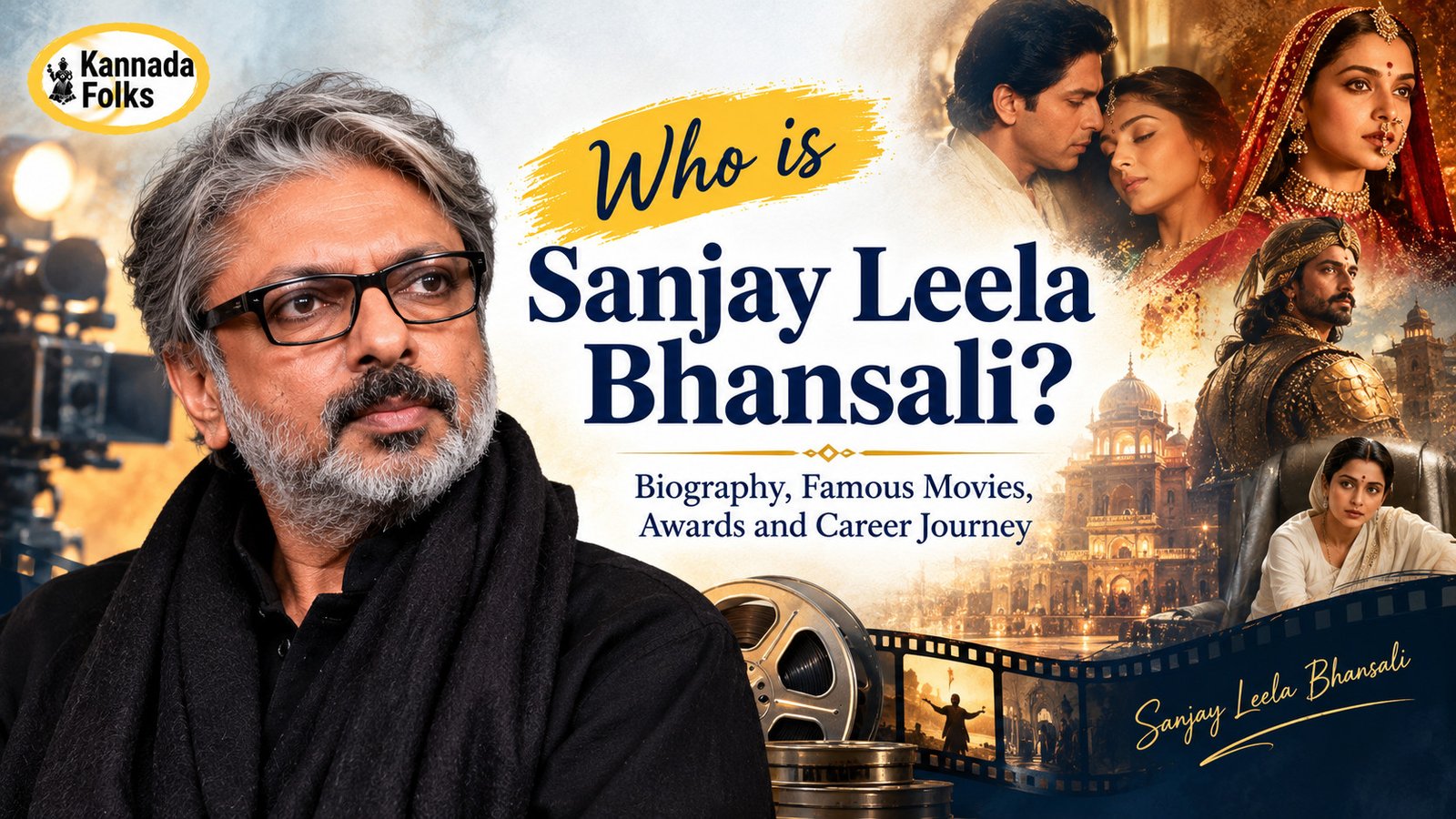
Sanjay Leela Bhansali
Sanjay Leela Bhansali is one of India’s most recognised film directors, producers, screenwriters, and music composers. Known for his grand visual storytelling, elaborate sets, powerful emotional narratives, and memorable musical compositions, he has created some of the most widely discussed films in modern Hindi cinema.
From the romantic drama Hum Dil De Chuke Sanam to the visually extravagant Devdas, Bajirao Mastani, and Padmaavat, Bhansali has developed a distinctive filmmaking identity that combines emotion, music, artistic detail, and dramatic storytelling.
Born on 24 February 1963 in Mumbai, Maharashtra, Bhansali developed an interest in cinema and eventually pursued professional film education at the Film and Television Institute of India (FTII), Pune. His journey from working behind the scenes to becoming an influential filmmaker reflects his dedication to cinematic craft and artistic ambition. <sup>1 2</sup>
Early Life and Education
Sanjay Leela Bhansali grew up in Mumbai in a family connected to the film industry. His mother, Leela Bhansali, played an important role in his life, and he later adopted her name as his middle name.
His interest in filmmaking led him to study at the Film and Television Institute of India in Pune, where he developed technical knowledge and an understanding of cinematic storytelling.
Before directing his own films, Bhansali worked as an assistant to filmmaker Vidhu Vinod Chopra. His early professional experience included working on projects such as Parinda and 1942: A Love Story. These experiences helped him understand filmmaking beyond the director’s chair, including editing, music, performance, and visual composition.
Rather than immediately becoming a mainstream director, he gradually built his experience across different aspects of film production.
How Did Sanjay Leela Bhansali Become Famous?
Bhansali made his directorial debut with Khamoshi: The Musical in 1996. The film explored the emotional relationship between a young woman and her deaf parents. Although it was not a major commercial success, it introduced audiences to his interest in emotionally complex characters and music-driven storytelling.
His breakthrough came with Hum Dil De Chuke Sanam in 1999. The romantic drama, featuring Salman Khan, Aishwarya Rai Bachchan, and Ajay Devgn, attracted attention for its music, colourful visual presentation, and complicated portrayal of love and relationships.
In 2002, he directed Devdas, starring Shah Rukh Khan, Aishwarya Rai Bachchan, and Madhuri Dixit. The film became internationally recognised for its elaborate production design, costumes, music, and tragic romantic narrative. Its international exposure helped bring greater attention to the scale and ambition of Hindi cinema.
In 2005, Bhansali released Black, a drama about a deaf-blind girl and her teacher. The film demonstrated a different side of his filmmaking, focusing on performances, human relationships, and emotional intensity rather than historical grandeur alone.
Read More – Here are four important benefits that can be gained by reading the Bhagavad Gita on a daily basis:
These films established him as a director who could explore intimate personal struggles while maintaining a strong visual identity.
Famous Movies Directed by Sanjay Leela Bhansali
Here are some of the important films associated with his career:
1. Khamoshi: The Musical (1996)
His directorial debut introduced audiences to his interest in music, family relationships, and emotional storytelling. The film remains an important starting point in understanding his artistic development.
2. Hum Dil De Chuke Sanam (1999)
This romantic drama explores love, marriage, sacrifice, and emotional conflict. Its memorable songs, vibrant settings, and character-driven story helped establish Bhansali as a prominent director.
3. Devdas (2002)
One of his best-known films, Devdas is a lavish adaptation of Sarat Chandra Chattopadhyay’s literary work. Its elaborate sets, expressive performances, and musical sequences made it a defining example of his grand cinematic style.
4. Black (2005)
A departure from his large-scale romantic dramas, Black focuses on communication, education, determination, and the relationship between a student and her teacher. The film received significant critical recognition.
5. Goliyon Ki Raasleela Ram-Leela (2013)
This intense romantic drama draws inspiration from the tragic love-story tradition associated with Romeo and Juliet. It features striking colours, energetic music, and dramatic conflict.
6. Bajirao Mastani (2015)
The historical romance follows the relationship between Maratha Peshwa Bajirao I and Mastani. Featuring Ranveer Singh, Deepika Padukone, and Priyanka Chopra Jonas, the film is known for its production design, costumes, music, and large-scale dramatic sequences.
7. Padmaavat (2018)
This historical period drama features grand sets, elaborate costumes, and dramatic performances. It also generated considerable public debate before its release, making it one of the most discussed Hindi films of its time.
8. Gangubai Kathiawadi (2022)
Starring Alia Bhatt, the film tells a dramatised story inspired by Gangubai Kathiawadi. It combines social themes, character-focused storytelling, music, and Bhansali’s signature visual style.
9. Heeramandi: The Diamond Bazaar (2024)
With this Netflix period drama series, Bhansali extended his storytelling into the streaming space. The series explores the world of courtesans in pre-independence India through elaborate settings, relationships, music, and political tensions.
Together, these projects illustrate the range of subjects he has explored, from personal relationships and disability to historical drama and social themes.
What Makes His Filmmaking Style Unique?
Sanjay Leela Bhansali is particularly known for treating a film as a complete artistic experience rather than simply a sequence of scenes.
Grand production design: His films often feature detailed palaces, traditional architecture, elaborate interiors, and carefully constructed environments that help establish the world of the story.
Costumes and colour: Rich colours, intricate fabrics, jewellery, and distinctive costume choices contribute to the visual identity of his characters and settings.
Music and choreography: Songs are central to many of his films. Music often communicates emotions, strengthens relationships, and advances the narrative.
Emotional storytelling: Love, sacrifice, ambition, social restrictions, loyalty, and tragedy recur throughout his work.
Attention to performance: His films frequently place demanding emotional and dramatic responsibilities on actors, creating memorable characters and intense scenes.
These elements have helped make his work recognisable to audiences even before they know who directed a particular film.
Awards and Recognition
Bhansali has received numerous awards during his career, including National Film Awards and Filmfare Awards. In 2015, the Government of India honoured him with the Padma Shri, one of the country’s major civilian honours.
His films have been recognised for directing, editing, screenwriting, music, and overall cinematic achievement. Devdas also received international recognition through a BAFTA nomination in the category for Best Film Not in the English Language.
His achievements reflect not only his work as a director but also his involvement in multiple creative aspects of film production.
Sanjay Leela Bhansali’s Contribution to Indian Cinema
Bhansali has helped sustain audience interest in large-scale musical dramas and historical romances at a time when filmmaking styles and viewing platforms continue to change.
His work brings together music directors, singers, choreographers, costume designers, production designers, editors, cinematographers, and performers. The result is a collaborative cinematic world in which visual and musical elements play an important storytelling role.
His career also illustrates that a filmmaker can move between different genres. While films such as Devdas and Bajirao Mastani are associated with grandeur, Black demonstrates his ability to focus on intimate human experiences.
Read – Brand Story: Vijayalakshmi G M; The Woman Behind WIN Corporate Training
Not every project has received the same response from critics or audiences, but his willingness to pursue a distinct creative vision has made him an influential figure in contemporary Indian filmmaking.
Frequently Asked Questions
1. Who is Sanjay Leela Bhansali?
Sanjay Leela Bhansali is an Indian film director, producer, screenwriter, and music composer known for films such as Devdas, Black, Bajirao Mastani, Padmaavat, and Gangubai Kathiawadi.
2. When was Sanjay Leela Bhansali born?
He was born on 24 February 1963 in Mumbai, Maharashtra, India.
3. What was his first film as a director?
His directorial debut was Khamoshi: The Musical, released in 1996.
4. Which are Sanjay Leela Bhansali’s most famous movies?
Some of his best-known films include Hum Dil De Chuke Sanam, Devdas, Black, Goliyon Ki Raasleela Ram-Leela, Bajirao Mastani, Padmaavat, and Gangubai Kathiawadi.
5. Has Sanjay Leela Bhansali received the Padma Shri?
Yes. The Government of India honoured him with the Padma Shri in 2015.
6. Why are his films visually distinctive?
His films are known for elaborate production design, expressive colours, detailed costumes, musical storytelling, choreography, and emotionally intense performances.
Read More – Thigalarapete Gopi: The Notorious Bengaluru Rowdy Who Built Power Through Fear
Sanjay Leela Bhansali has built a distinctive place in Indian cinema through his combination of visual artistry, music, and emotional storytelling. From his early work on Khamoshi: The Musical to celebrated productions such as Devdas, Bajirao Mastani, and Gangubai Kathiawadi, his career demonstrates a sustained commitment to ambitious filmmaking.
For audiences interested in Hindi cinema, his journey offers an insight into how a director’s creative identity can shape the way stories are presented on screen.
His films continue to invite discussion about love, sacrifice, history, society, and the power of cinematic expression—making him an important filmmaker to explore when learning about contemporary Indian cinema.
 Support Us